
Gold and silver prices are showing renewed signs of life after months of retreat from the record highs that jolted precious-metals markets earlier this year.
In Canadian-dollar trading this this morning (Aug. 20), gold was trading around $6,186 an ounce while silver was trading around $92.82, extending a recovery that has been developing over the past two weeks. The gains remain well short of the extraordinary levels reached in late January, but the recent movement represents a notable change after a prolonged period in which both metals surrendered much of their early-2026 advances.
Canadian Coin News reported in late January that gold had briefly traded near US$5,600 an ounce – about $7,670 CAD at the time – before plunging in a rapid selloff. Silver had peaked at US$121.67 – then about $167 CAD – before beginning an even steeper retreat. The reversals followed an extraordinary January rally that repeatedly pushed both metals into record territory.
The correction continued through the following months, although it was anything but orderly. CCN has followed the sharp swings throughout 2026 as changing interest-rate expectations, currency movements, geopolitical tensions and energy prices repeatedly moved the metals in both directions. By late March, volatility was also affecting the physical bullion business, with refining delays, tighter dealer liquidity and changing buy prices adding another layer of uncertainty.
For Canadian collectors and bullion investors, however, the international price of gold and silver tells only part of the story.
Precious metals are primarily priced internationally in U.S. dollars, meaning movements in the Canadian dollar can have a significant effect on what Canadians pay – and what their holdings are worth. A weaker Canadian dollar generally pushes gold and silver prices higher in Canadian funds, while a stronger loonie tends to push Canadian bullion prices lower, assuming the U.S.-dollar price of the metal remains unchanged.
As a result, Canadian gold and silver prices can move differently from their U.S.-dollar counterparts. A rising U.S.-dollar bullion price can be amplified by a weakening loonie, while a strengthening Canadian dollar can partially offset gains in the underlying metal.
That currency effect has been particularly important during the volatile 2026 market. Earlier this year, weakness in the Canadian dollar helped amplify precious-metal prices when expressed in Canadian funds. More recently, the loonie has begun recovering from its lows, creating a potential headwind for Canadian bullion prices even as gold and silver strengthen internationally.
The latest international move has nevertheless been significant.
Gold surged more than three per cent Aug. 19 after the U.S. Treasury announced it would double the size of liquidity-support buybacks for longer-dated government bonds. The announcement pushed long-term Treasury yields lower and weakened the U.S. dollar, providing fresh support for precious metals.
Spot gold climbed as high as US$4,491.16 an ounce – about $6,200 CAD – its strongest level since June 4. Silver advanced nearly four per cent to US$65.64 – about $90.65 CAD. Gold also moved above its 100-day moving average, a technical level closely watched by traders for indications of changing market momentum.
Earlier in the day on Aug. 19, before the U.S. Treasury announcement accelerated the rally, gold was trading around US$4,370 – about $6,035 CAD – while silver stood near US$63.80 – about $88 CAD. Analysts were already pointing to a softer U.S. dollar, easing bond yields and changing expectations for U.S. interest rates as providing a more favourable backdrop for bullion.
Despite the rebound, considerable ground remains to be recovered. Compared with the late-January Canadian-dollar levels tracked by CCN, gold at $6,227 remains roughly 19 per cent below its peak near $7,670. Silver has suffered a much larger correction, with today’s $91.57 price about 45 per cent below the roughly $167 Canadian equivalent of its January peak.
The difference between U.S.- and Canadian-dollar prices will remain important if the recovery continues. Gold or silver could rise in U.S. dollars while producing a smaller increase for Canadians if the loonie strengthens at the same time. Conversely, renewed weakness in the Canadian dollar could amplify another international bullion rally.
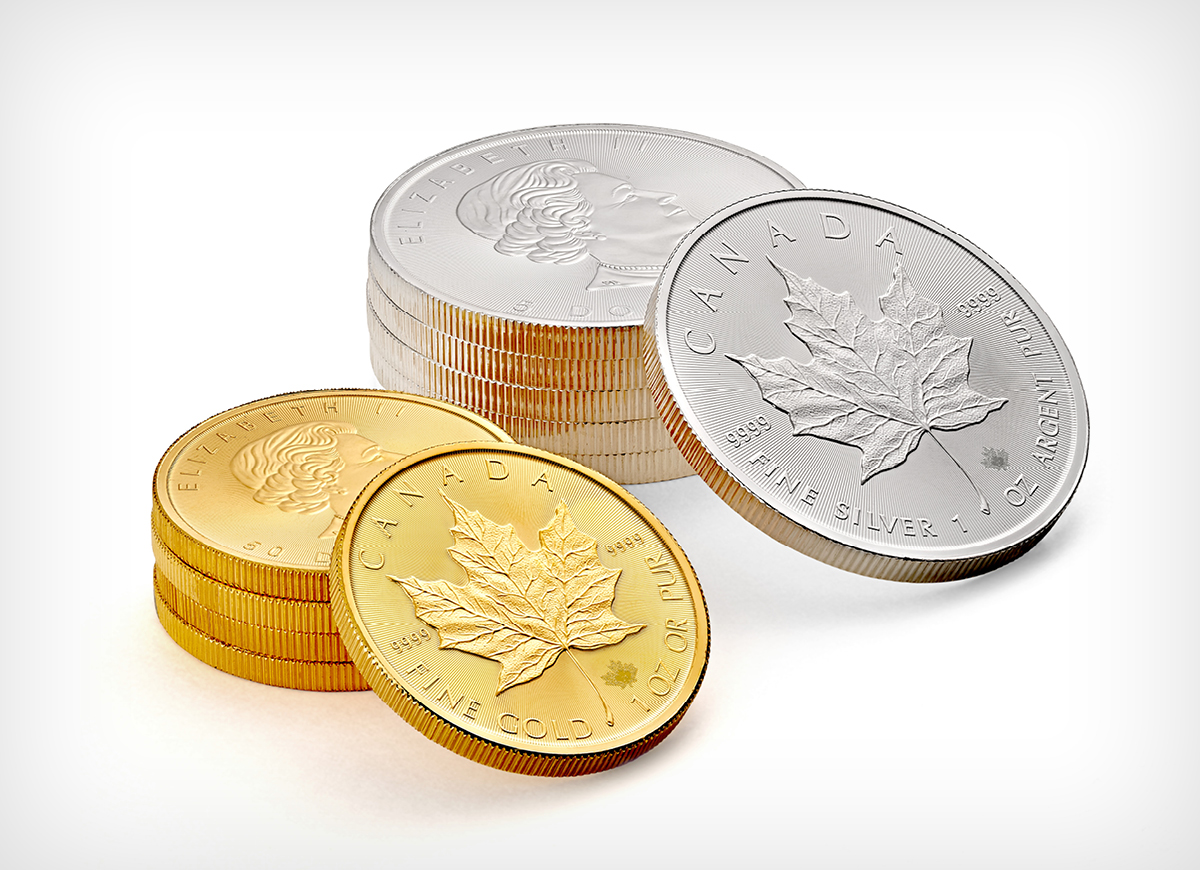
For coin collectors and dealers, silver’s movements are especially significant. Large changes in its spot price directly affect the melt value of Canadian circulating silver coins and can alter the relationship between bullion and numismatic value. Gold prices similarly influence Maple Leafs, bars and lower-premium Canadian gold coins, while rapid price changes can make buying and selling physical bullion more challenging for dealers.
Whether the past two weeks mark the beginning of a sustained recovery remains uncertain. Gold and silver have staged several rebounds since January, and 2026 has repeatedly demonstrated how quickly sentiment can change.
But after months in which the broader direction has been downward, the recent strengthening – capped by today’s sharp advance – is providing one of the clearest indications in some time that precious metals may again be attempting to build upward momentum.
For Canadians, however, the next chapter will depend on two moving targets: where gold and silver go in international markets, and what happens to the loonie.